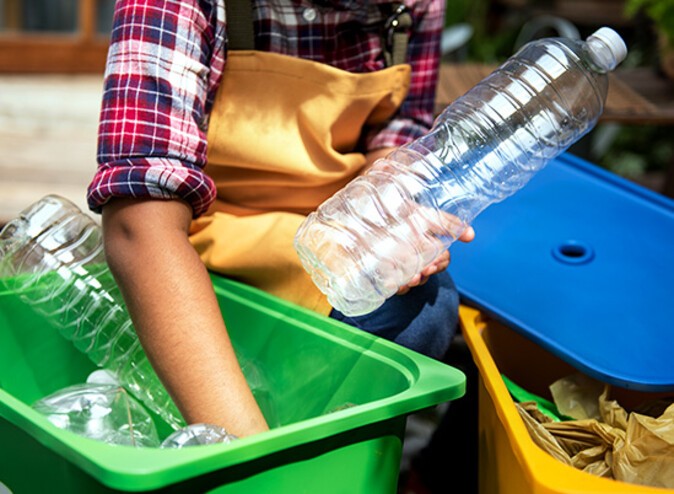
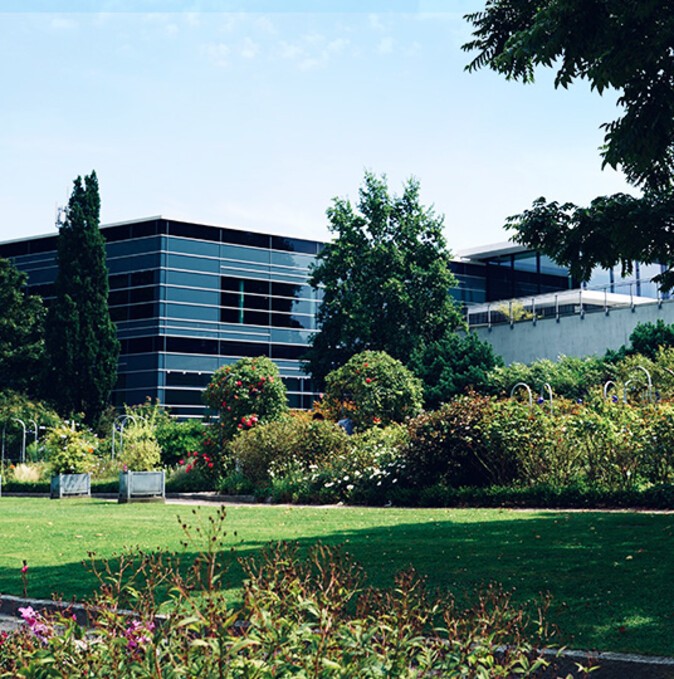
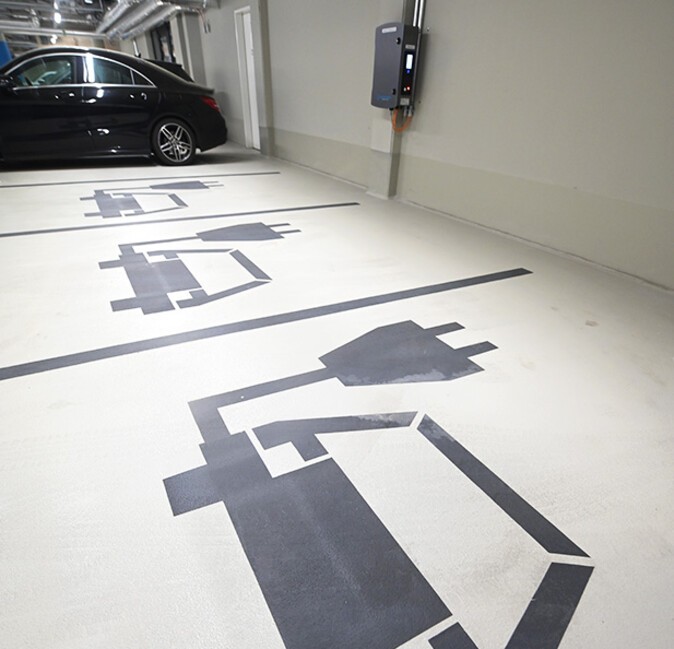
Green electricity, company bikes for employees, charging posts for e-cars, seasonal and regional catering, water fountains instead of plastic bottles, recyclable and reusable carpeting, CO2 balancing, LED lighting: These are just a handful of the many sustainability measures taken by Hamburg Messe und Congress GmbH to date. Further details can be found in the sustainability report the trade fair company committed to publishing biannually in 2020. The report is based on the German Sustainability Code (DNK).
„Only when everyone pulls together can the complex challenges of our time be tackled.“
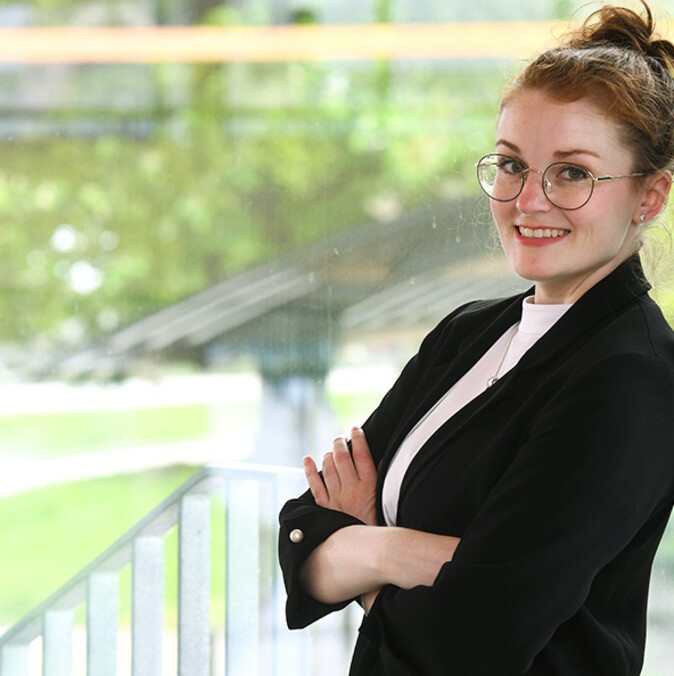
One key element in this process has been the creation of a first full-time Sustainability Representative position at HMC. The person occupying this position since the beginning of 2023 is Hannah Kindler. The Hamburg native has a Masters degree in Management and Entrepreneurship from Leuphana University in Lüneburg, which is well known for its focus on sustainability. Before moving into her present position, Hannah worked at the trade fair company as an intern, then as a work student. In her new position, she is in charge of establishing and expanding HMC’s sustainability management system, supporting Sabine Off who accepted the responsibilities of Sustainability Superintendent in addition to her other activities in 2013.
“Sustainable development is a development that meets the needs of the present without compromising the ability of future generations to meet their own needs. This is how the 1987 Brundlandt Report of the World Commission on Environment and Development defines it. In a corporate context this means that rather than first making a profit and then investing it in environmental and social projects, a company should generate its revenues in an eco-friendly and socially responsible manner from the beginning. This make sustainability a common concern for all business areas of our company,” explains the expert, pointing to the many different fields of activity of the events industry. Trade fairs have a significant impact as drivers of sustainable transformation, she adds: “Trade fairs are enormously important as meeting places for movers and shakers, and as platforms for networking and innovation.”
At HMC, Hannah Kindler’s responsibilities include participating in the sustainability network of Hamburg’s public sector companies as well as the sustainability working group of AUMA, the Association of the German Trade Fair Industry. “We can only tackle the complex challenges of our time by pulling together,” she says.
One of the latest and most important efforts within HMC’s expanding sustainability processes is the development of an ecological, economic and social sustainability strategy. It will form the basis and provide guidance for future strategic decisions about the stepwise implementation of additional sustainability measures across all activities along the HMC value chain.
“For example, we are also looking at our suppliers, our employees, our technical systems, and our purchasing and sales departments,” says Hannah Kindler. “As one of the first trade fair and congress companies with a sustainability strategy, we have set our course towards further strengthening our position as a sustainable company, making sure we will be ready for the major new regulations that will be implemented at the European level.”
Sustainable developments at HMC are highly dynamic: A second full-time position has already been advertised. The next major project is to implement an integrated climate protection concept. What is more, HMC is currently looking into installing photovoltaic panels on all exhibition hall roofs. Says Hannah Kindler: “Projects are getting bigger – and so are the challenges and opportunities as we strive to make further contributions to sustainable development.”
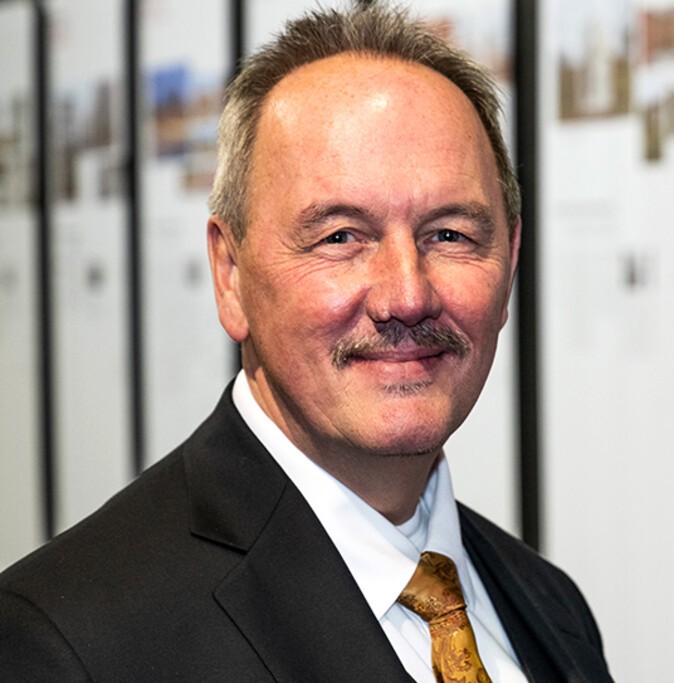
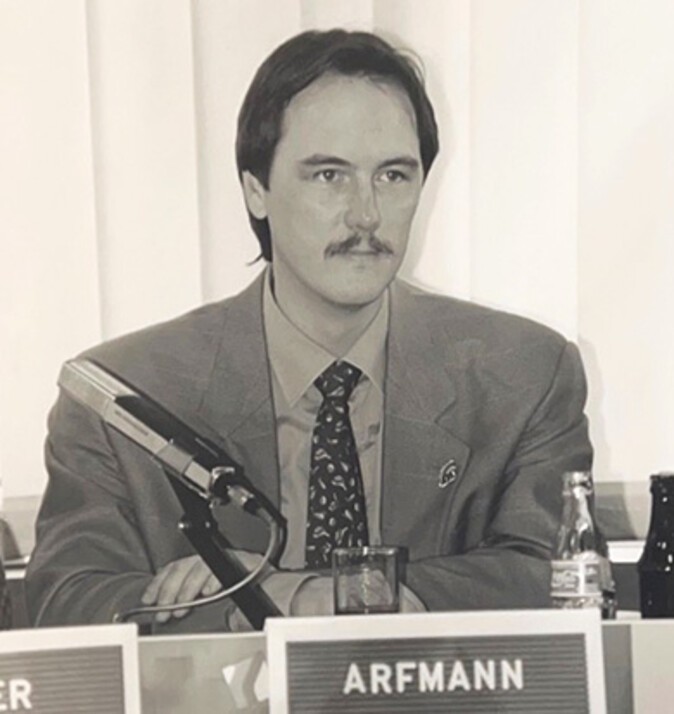
He is a Royal Consultant, Special Friend of the Crow People, and Honorary Doctor of Universitas Petropolitanae, the University of St. Petersburg – an impressive collection of titles that Michael Arfmann, Project Head at Hamburg Messe und Congress GmbH, acquired in his professional life. The number of his years of service is just as impressive. Having prevailed against 360 co-applicants for the position, Michael Arfmann was hired as the first-ever trainee of HMC on 1 August 1977 to begin training as an office clerk. He remained faithful to the company for 45 years and five months before retiring at the end of 2022 – probably setting a company record for all eternity, despite the fact that more than 220 young women and men have since followed in his footsteps as trainees at HMC.
In the year 1977, Hamburg is a stronghold of punk rock; the city state’s football club HSV wins the European Cup; and on the banks of the river Elbe, the first ever Port Anniversary is celebrated. Later on the festival was to be organised by HMC every year from 1994. The famous new tunnel under the river was completed just two years earlier, the iconic Köhlbrandbrücke bridge three years earlier, the CCH four, and Hamburg Messe und Congress GmbH was established no more than five years before.
In the streets you see cars with names such as VW Beetle, Ford Taunus or Opel Kadett. On the pavements you frequently see queues forming outside telephone boxes, and every street corner is adorned by a cigarette machine. In offices, urgent messages come rattling out of telex machines on punched tapes, and trade fairs are organised by making handwritten entries in large books. “In those days we had to request every external phone call from the switchboard, and correspondence with exhibitors occurred by post, so it took several days to receive an answer. But the trade fairs did function well nevertheless,” remembers Michael Arfmann who answers the question about the greatest change in his professional life without hesitation: “Computers”.
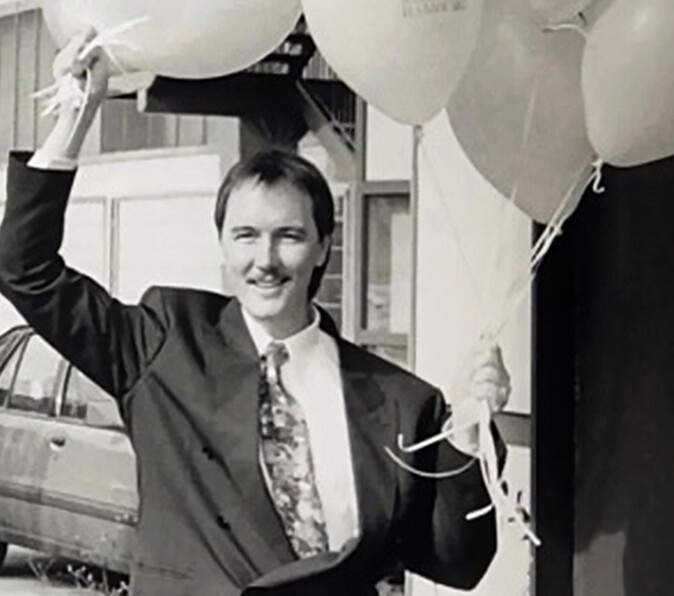
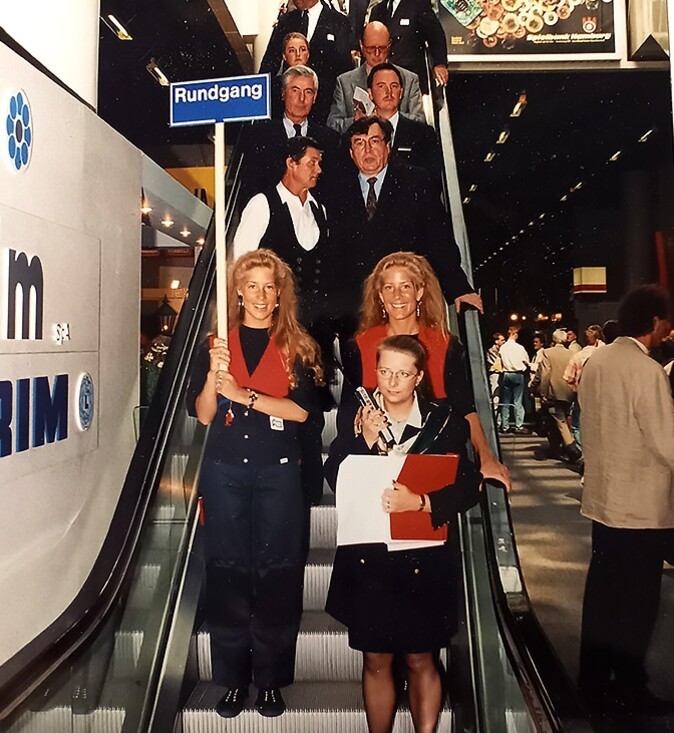
But there where many other changes. Michael Arfmann oversaw a wide array of trade fairs, such as the construction fair DACH und WAND, the book fair Buch Hamburg, one home² fair, the motorcycle event Hamburger Motorradtage, as well as RENOVA in Dresden, Hansetec in St. Petersburg, NORTEC, Nordbüro, and mineralien – just to name a few. He always catered for two different worlds, combining technical requirements and fantasy to make his trade fairs both informative and appealing. One defining moment of his early professional life was his dispatch to the 1988 Olympic Games in Seoul as Building Coordinator of the German House, which was organised and operated by HMC.
But the best was yet to come. “The 1990s were my decade,” he recalls. Born in 1959, he was awarded an honorary doctorate by the University of Saint Petersburg in 1993 for his thesis on conversion of decommissioned military equipment for civilian use, a topic that has sadly regained importance after 30 years.
Two years later, Joseph Medicine Crow, the chief of the Crow Nation, appointed Michael Arfmann a Special Friend of the tribe – at a place steeped in history, the Little Bighorn River in Montana. The Chief and the man from Hamburg had met while Arfmann was preparing an exhibition titled “Indians – North America’s Indigenous People”. The exhibition never took place, but the friendship endured for many years.
The last big title – Royal Consultant of King Bansah, Togbui Ngoryifia Céphas Kosi Bansah, the king of Gbi Traditional Area Hohoe in Ghana – was closely linked with the trade fair Michael Arfmann oversaw and developed for many years: mineralien, a jewellery and precious stones exhibition. The people from Ghana were partners of the event in 2011.
In 2008 Michael Arfmann accomplished a brilliant feat by combining the ailing NordElektro with SHK to create GET Nord after having overcome initial resistance from the electrical engineering, sanitary, heating and air conditioning industries. The concept behind GET Nord has remained unique across Europe and is extraordinarily successful.
This may, to some extent, be down to the fact that Michael Arfmann was never afraid to connect the seemingly incompatible. For example, the speaker lists for Hamburg Senate receptions on occasion of GET Nord included people like mountaineer Reinhold Messner, astronaut Prof. Dr Ulrich Walter, philosopher Richard David Precht, the legendary referee Urs Meier, and Trigema CEO Wolfgang Grupp. It takes some fantasy to connect these people with bathtubs, light switches and water taps.
Speaking of water: When a few submarines dived too deep in Hamburg, Michael Arfmann called the fire brigade, ordered pizza for everyone, and told his team they had to work through the night. What had happened? As Project Head, Arfmann was in charge of the model-making fair Modellbauwelt where huge water basins were used for demonstrations of ship scale models. Some submarine models dived so deep that they damaged the foil of the tank. So the water had to be pumped out, the plastic foil repaired overnight, and the basin refilled before the next morning. Asked whether he would opt for HMC again if he were to choose his future profession today, Michael Arfmann unsurprisingly replies “Yes, instantly!” without hesitation. “To me, no industry is more fascinating. You get to work with a huge variety of topics and people...”
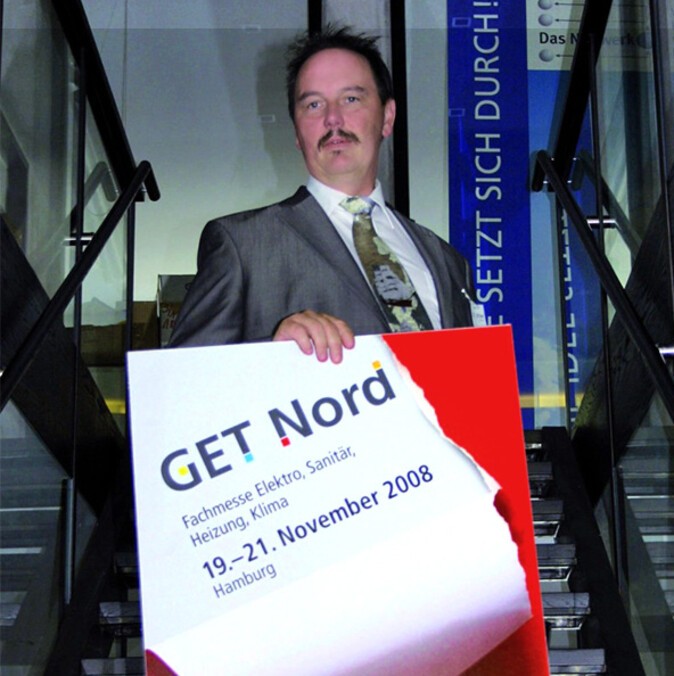
„For me, there is no more exciting industry. You have to deal with a huge range of topics and people…“
Trade fairs such as the H2EXPO & CONFERENCE or WindEnergy Hamburg almost bear the energy transition and climate protection as goals in their very names. But they are, by far, not the only events with a strong focus on sustainable development. Quite the contrary: There is hardly a trade fair where reducing greenhouse gases, driving sustainable production, and achieving maximum energy efficiency aren’t among the topics discussed.
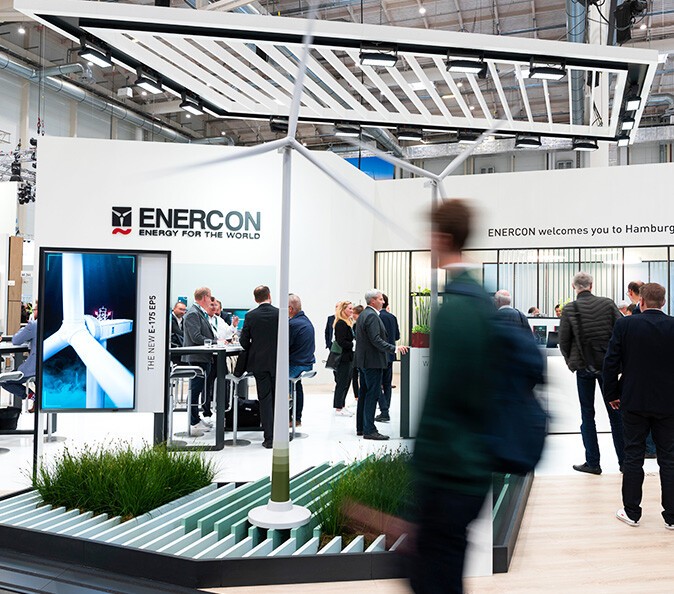
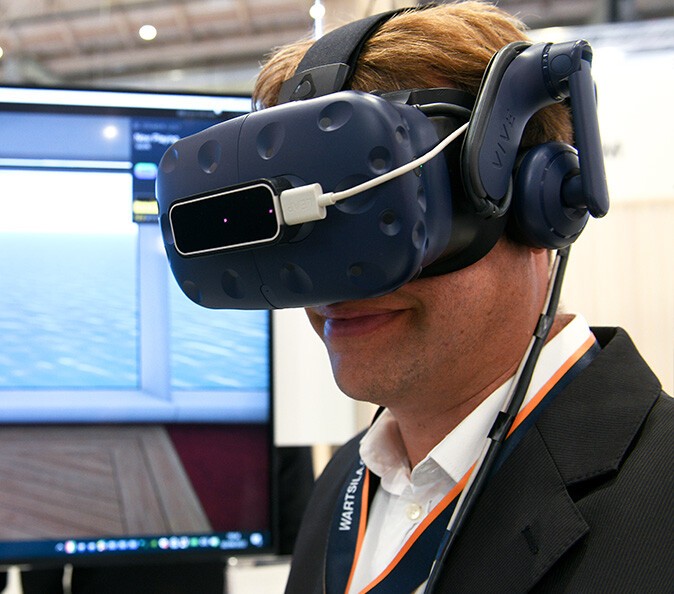
For example, the motto of the 30th SMM in 2022 was “Driving the Maritime Transition”, expressing the international shipping industry’s ambitious goal to achieve carbon neutrality by 2050. This means that innovative and practical solutions are needed soon, especially in the areas of propulsion technologies and alternative fuels. For the past 60 years SMM has been the place where innovations such as these are first presented to a wider public.
The range of solutions extends from flow-optimised ship propellers to new fuel cell concepts, and through to hybrid systems and engines running on e-methanol. Another important topic is retrofitting the current fleet of roughly 60,000 merchant ships in service to make them gradually more eco- and climate-friendly. Automation, digitalisation and data management play important roles in achieving that.
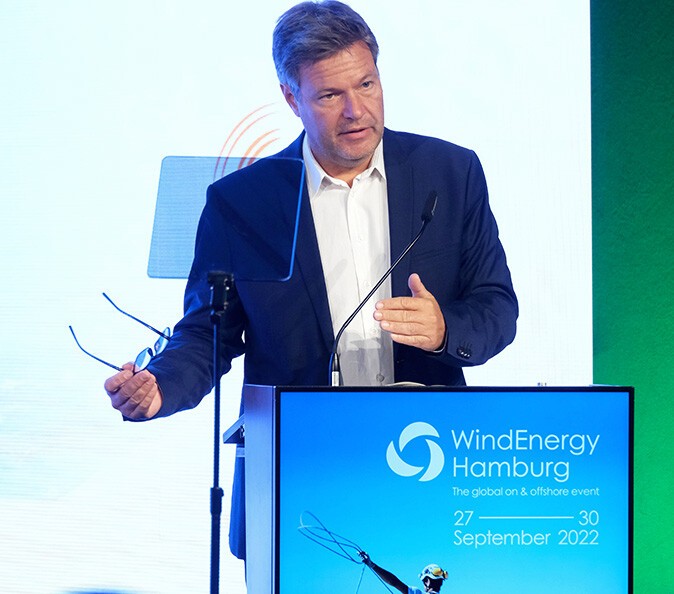
Digitalising approval procedures was one of the topics addressed at WindEnergy Hamburg 2022. During the opening ceremony, Dr Robert Habeck, Federal Minister of Economics and Climate Protection, underlined the extraordinary importance of wind energy in ensuring a safe energy supply system for the future: “I am very pleased to open the world’s leading expo for wind energy on land and at sea here in Hamburg. The importance of wind energy, and of driving renewable energies in general, is more pressing today than ever before. Accelerating the energy transition is of the essence if we are to achieve a secure and sustainable energy system, not just in Germany but across Europe,” he said. It was only logical for the newly-created H2EXPO & CONFERENCE to celebrate its premiere during WindEnergy Hamburg.
The heating transition, resource-efficient construction, energy efficiency and drinking water hygiene were among the core topics at GET Nord. This demonstrated once again how current topics are in focus in the building services industry and how solutions can be enabled by interlinking the electrical, sanitary, heating and air conditioning trades.
The urgency of driving these solutions is clear to see. According to the Federal Environmental Agency, the building sector is among the top emitters of greenhouse gases and one of the biggest producers of waste, generating around 115 million tonnes of CO2 and roughly 230m tonnes of construction and demolition waste every year.