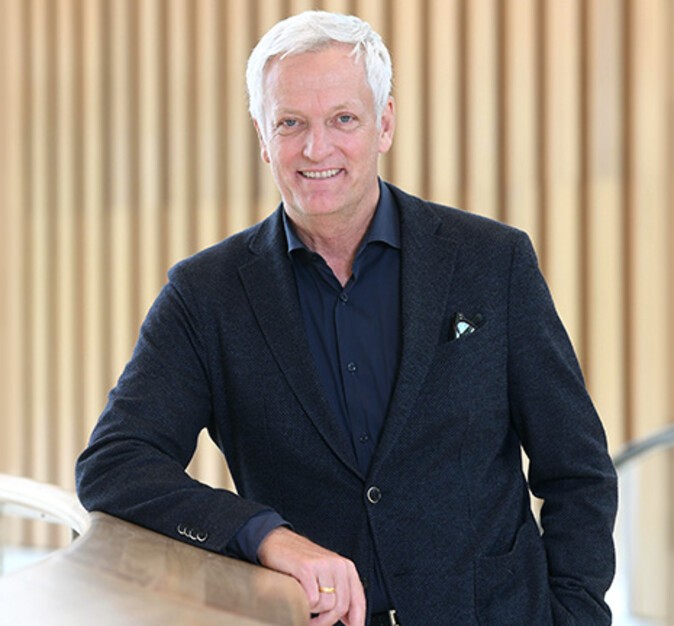
In 2014, ARGE agn leusmann/Tim Hupe Architekten won the architectural competition for the modernisation of the new CCH. Tim Hupe was in charge of design, permitting and key detail planning. We had a conversation with the Hamburg architect.
Mr Hupe, what prompted ARGE agn leusmann/Tim Hupe Architekten to join the architectural competition?
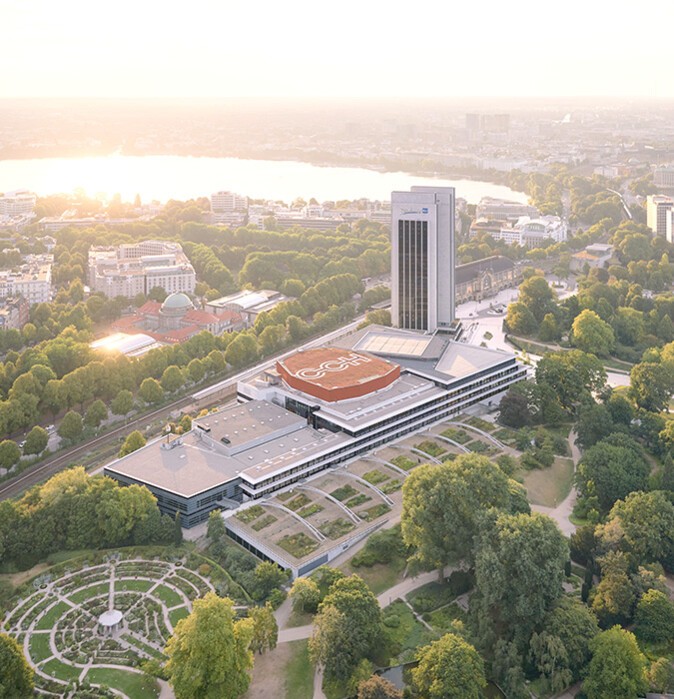
Tim Hupe: We actually joined the competition as if it were something like the Olympics. We really wanted to be part of this leading-edge project. After an initial phase of innocence we realised how attractive but also how complex this building challenge was. We looked at the CCH, which was considered Europe’s largest and most modern congress centre when it first opened in 1973, as a city within the city. The lines of sight into the adjacent park and to the train station were our core concern from the beginning although that was not expressly required in the project specifications.
I am sure you were really excited when you won first prize in the competition.
Tim Hupe: Of course, but the decision also came very much as a surprise, especially in consideration of the large number of top-flight competitors. But this happens quite frequently in architecture.
What happened then?
Tim Hupe: After we had filed for the building permit the same year, we spent a long time planning, then building, always intensely preoccupied with the substance of the building from the 1970s. There were endless optimisation, adjustment and sampling rounds and some unrealistic budget plans, as well. In the end, we would have liked the project to have proceeded a bit faster.
What were the greatest challenges?
Tim Hupe: Counting them all down would take too much time. But dealing with the existing substance and satisfying the technical quality requirements for the new construction were certainly among them. In addition, the disproportionate amount of complex building services installations caused enormous complexity.
Did you visit the site frequently while construction was in progress?
Tim Hupe: In fact, I didn’t, because I personally find half-finished construction sites very frustrating. But when I was finally standing in the entrance hall for the first time shortly before the opening, and was able to enjoy the excellent lighting, I was at peace with the project and enjoyed the experience very much. The atmosphere is great, the building has good karma, and most details turned out the way we had originally envisioned them.
„The atmosphere is right, the house has good karma and most of it turned out the way we originally envisioned.“
What should people who are interested in architecture be especially aware of when visiting the CCH?
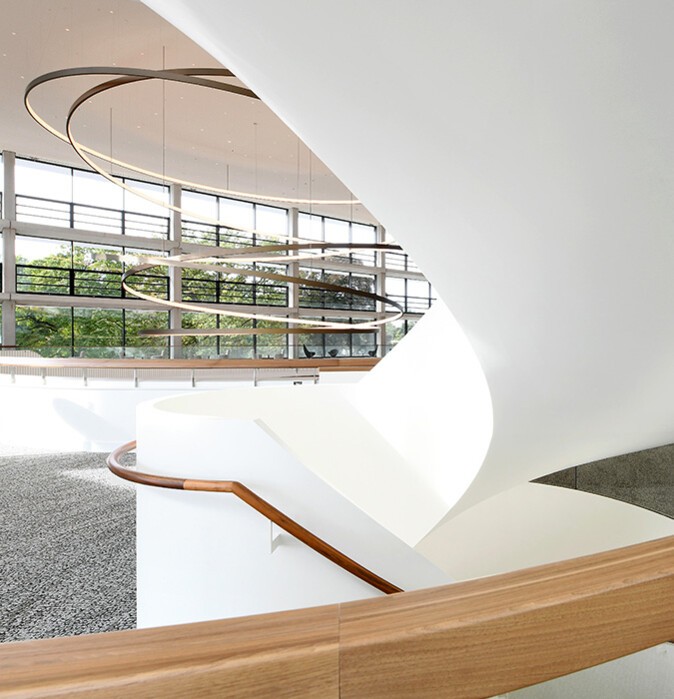
Tim Hupe: I would recommend focusing on lighting, acoustics and what was done to make the building inclusive and barrier-free. I think a lot of things turned out really well in this respect. To me, one of the highlights at the new CCH is the entrance hall. Despite its dimensions, it does not overwhelm the visitor. As a place where people meet, it does permit intimacy, a fact that became clear during the opening ceremony. Another aspect that should be mentioned because it is not so evident to everybody is that there are no supporting pillars in the entrance hall. I belong to a faction of architects that considers supporting pillars as monuments to a lost battle against gravity. Pillars also inhibit free movement across the space. This is why the support structure of the entrance hall is located above the ceiling.
Another challenge to us was the triangular geometry of the entrance hall. By giving the stairs and galleries arching shapes, we succeeded in framing the space while guiding visitor movements. The circular concept finds its logical continuation in the floor and ceiling.
And what about the light in the building?
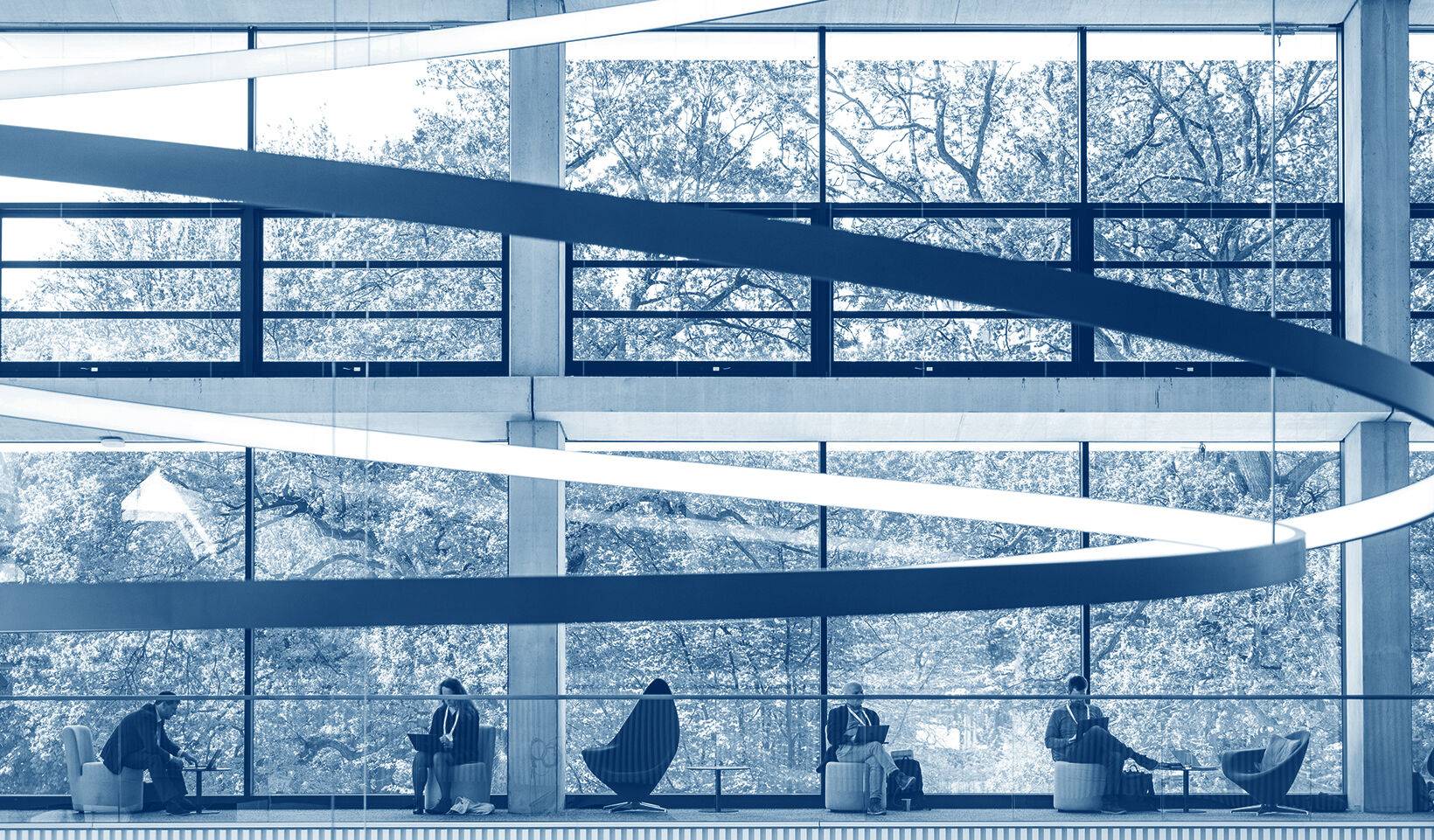
Tim Hupe: Especially the daylight should always be as mild as possible. The long, horizontal ceiling slabs help achieve that by functioning as a “brise soleil” (sun breaker). They also act as an intermediary element between the Belvedere and the park landscape by improving the inward and outward view. If you place your flat hand above your eyes to shield them against the central light, you understand why we opted for these building elements. By the way, the same elements determin the appearance of the building on the outside while visually alluding to the hotel tower. While the CCH spreads out as a low-lying structure between the railway line and the park, the hotel tower can be seen from everywhere in the city. We wanted to take advantage of that.
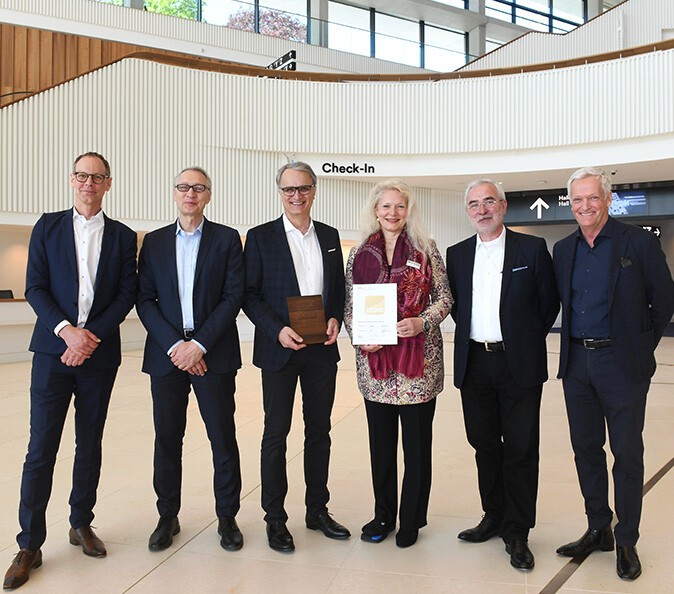
The CCH received a Gold certificate from the German Society for Sustainable Construction (DGNB) as well as a first-rank BDA Hamburg Architecture Award 2022. What does this mean to you?
Very much. We are very happy about both the certification and the award. Above all, we are proud to see the CCH, Hamburg’s project of the century, now being a focal point for visitors from around the world again, knowing that our architecture made a significant contribution to this.